
Snow, Ice, and Trees: Why Winter Tree Removal Is Sometimes Necessary in Connecticut
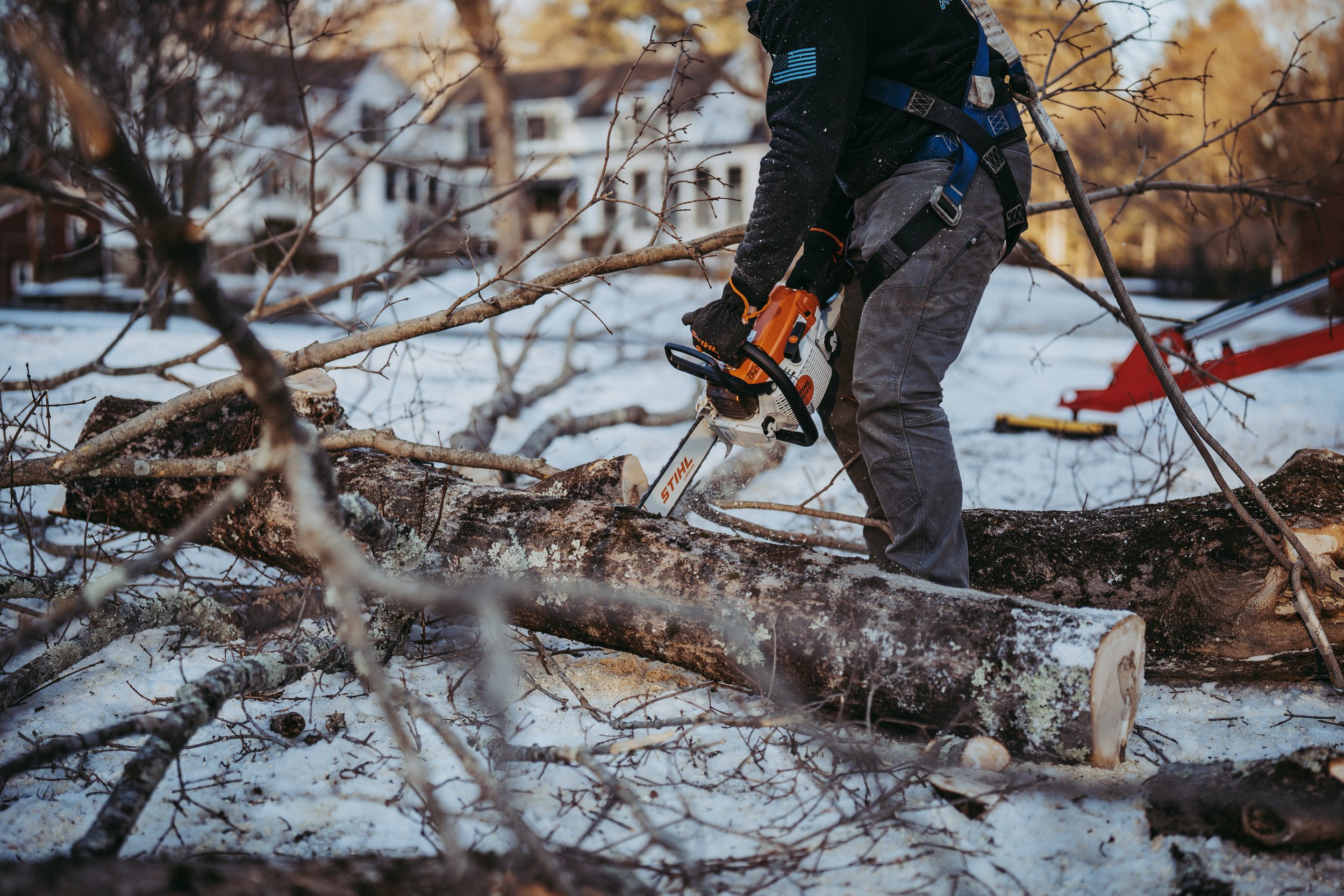
Connecticut winters place extreme stress on trees—often in ways homeowners don’t notice until something goes wrong.
Snow accumulation, ice storms, and constant freeze–thaw cycles can weaken even healthy trees, increasing the risk of sudden branch failure or full uprooting. In many cases, winter tree removal in Connecticut isn’t optional—it’s preventive safety work.
This guide explains how winter weather affects trees, why problems often surface during colder months, and when professional tree removal becomes the safest course of action for homeowners in Northwest Connecticut.
How Connecticut Winters Stress Trees
Compared to milder regions, Connecticut’s winter conditions create a unique combination of forces that accelerate tree failure.
Snow Load and Ice Accumulation Increase Failure Risk
Snow adds weight. Ice adds density—and rigidity.
When branches collect heavy snow or glaze ice, the load can exceed what the tree’s structure can safely support. Trees with:
Weak branch unions
Long horizontal limbs
Internal decay or previous storm damage
are especially vulnerable.
Ice storms are one of the leading causes of sudden winter tree failure in Connecticut, often causing damage with little warning.
Freeze–Thaw Cycles Weaken Root Stability
Connecticut winters rarely stay consistently frozen. Temperatures fluctuate above and below freezing, causing soil to expand and contract repeatedly.
This movement can:
Loosen root systems
Reduce anchoring strength
Increase the risk of whole-tree uprooting
Trees that appeared stable in the fall may begin leaning after mid-winter storms—an early warning sign that shouldn’t be ignored.
Dormant Trees Still Fail in Winter
Dormancy does not equal strength.
While trees aren’t actively growing, dead or compromised limbs don’t become safer in winter. Without leaves to slow falling branches, winter failures often come down faster, heavier, and with more force.
Why Winter Tree Removal in Connecticut Is Sometimes the Safest Option
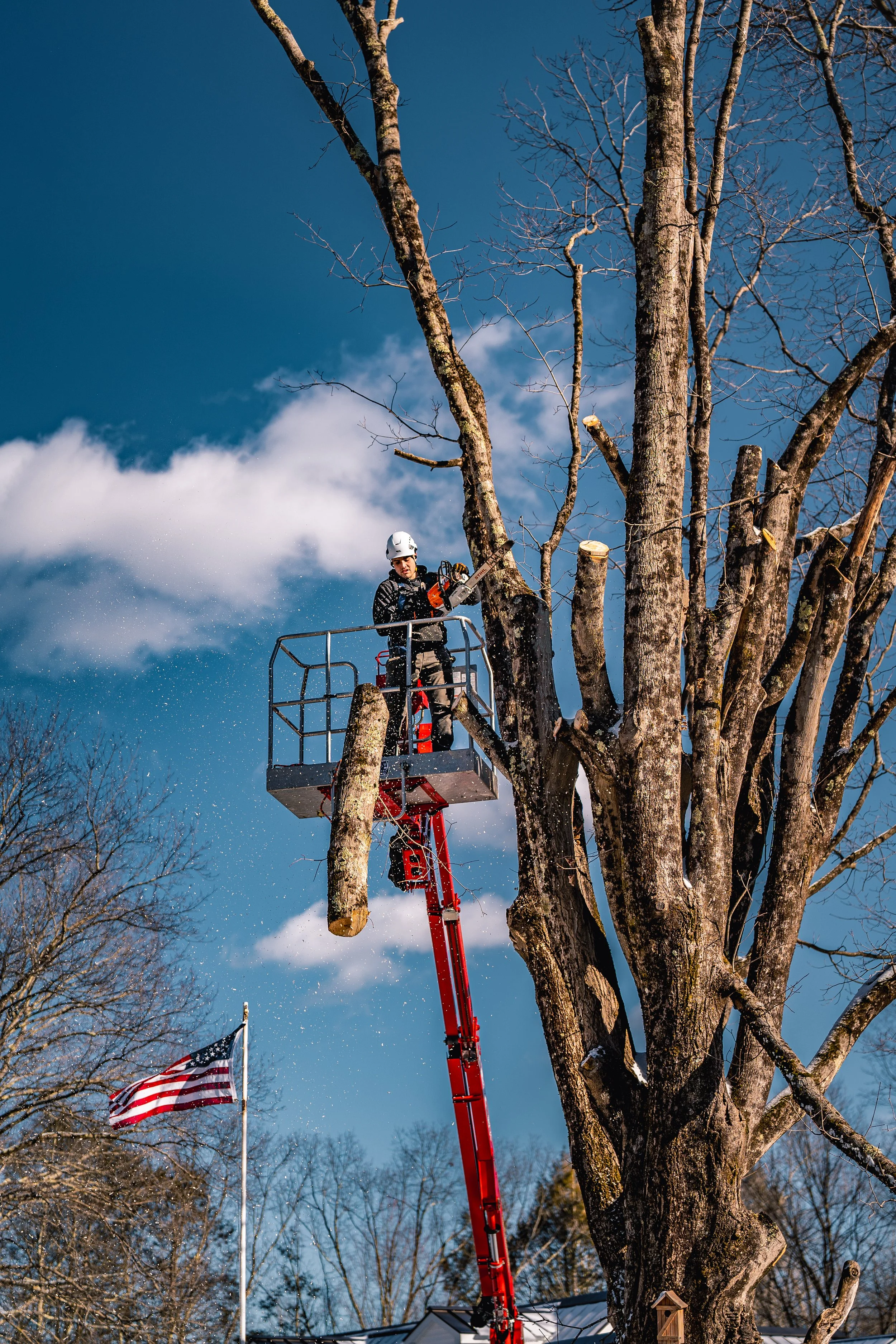
Hidden Structural Problems Become Visible After Storms
Snow and ice often expose issues that remain hidden during summer, including:
Cracks in trunks
Split or weakened branch unions
Hollow or decayed interior wood
Winter storms frequently reveal problems that would otherwise go unnoticed until failure occurs.
Dangerous Trees in Winter Are Unpredictable
A tree leaning toward a home, driveway, or utility line doesn’t need to fall completely to cause damage.
Even partial failures can:
Damage roofs and siding
Block driveways or access roads
Pull down power or communication lines
Once visible storm damage occurs, homeowners may also face increased liability if a known hazard is left unaddressed.
Emergency Tree Removal in Connecticut Is Often Time-Sensitive
After major storms, damaged trees rarely improve on their own. As temperatures fluctuate, cracks widen, roots shift, and secondary failures become more likely.
Emergency tree removal in Connecticut focuses on:
Stabilizing immediate hazards
Preventing cascading failures
Restoring safe access to homes and roadways
Waiting until spring can significantly increase repair costs—and risk.
If a tree on your property is damaged or leaning after a storm, a professional winter inspection can determine whether removal is necessary before conditions worsen.
Is Winter a Good Time for Tree Removal in Connecticut?
In many cases—yes.
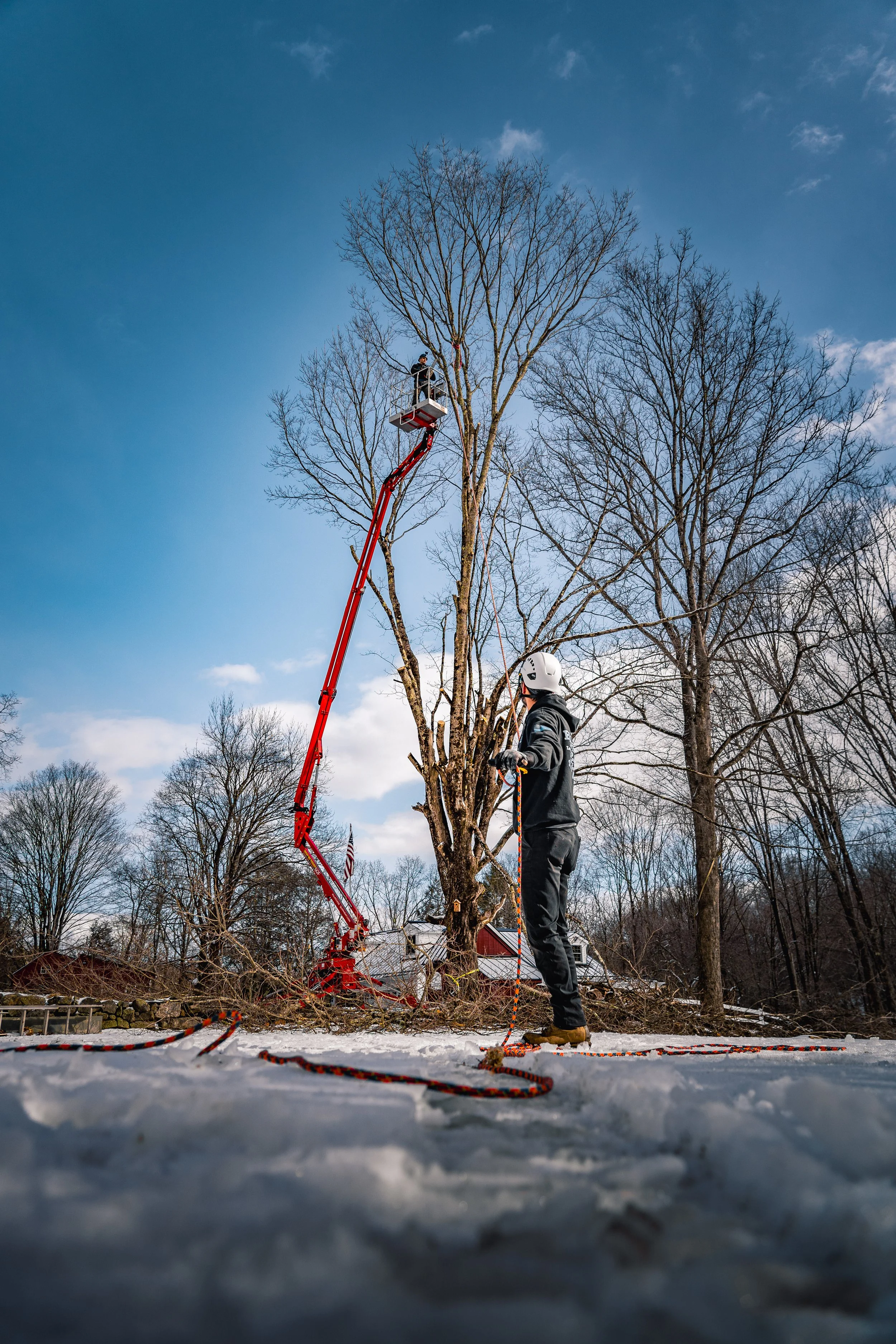
Frozen Ground Can Reduce Property Damage
Frozen soil often supports heavy equipment better than wet spring ground. This can:
Minimize lawn rutting
Reduce soil compaction
Protect surrounding landscaping
Winter removals are often cleaner and more controlled than spring emergency work.
Better Visibility Improves Safety and accuracy with removal
Without leaves:
Arborists can clearly see branch structure
Decay and defects are easier to identify
Removal planning becomes more precise
This visibility allows for safer, more efficient work.
Faster Scheduling for Safety-Driven Work
Spring and summer schedules fill quickly. Winter inspections and removals are often completed faster when safety—not aesthetics—is the priority.
Common Winter Tree Risks in Northwest Connecticut
Older neighborhoods and wooded properties bring additional considerations.
Mature Trees Face Higher Winter Stress
Many properties in Northwest Connecticut feature trees that are decades old. Age alone isn’t a problem—but age combined with winter stress can be.
Warning signs include:
Dead or thinning tops
Large, overextended limbs
Previous storm damage
Evergreens Retain Snow and Ice
Pines, spruces, and hemlocks hold snow, dramatically increasing branch load. Bent or split evergreens often don’t recover without intervention.
Trees Near Structures Carry Higher Risk
Trees close to Homes, Garages, Driveway, and Walkways pose elevated winter risks, as ice-weighted limbs can fail suddenly and without warning.
What to Do If a Tree Is Leaning After a Snowstorm
A leaning tree should never be ignored.
Take these steps:
Keep people and vehicles clear of the area
Do not attempt DIY cutting
Contact a professional for inspection
Early evaluation often prevents full failure and more extensive damage.
Insurance and Winter Tree Damage in Connecticut
Homeowners frequently ask whether insurance covers winter tree removal.
In general:
Emergency removal may be covered if a tree damages a covered structure
Preventive removal is typically not covered, but can prevent far greater costs
Always document storm damage and consult your insurance provider promptly.
Winter Tree Removal as Prevention, Not Panic
Not every winter tree issue is an emergency, but proactive inspections matter.
Winter assessments help:
Identify high-risk trees early
Plan removals before spring storms
Reduce emergency callouts and liability
A calm, professional inspection provides clarity and peace of mind.
Why Local Experience Matters During Connecticut Winters
Blue Js Lawncare provides winter tree removal throughout Northwest Connecticut, taking a safety-first, preventive approach that protects homes, property, and peace of mind.
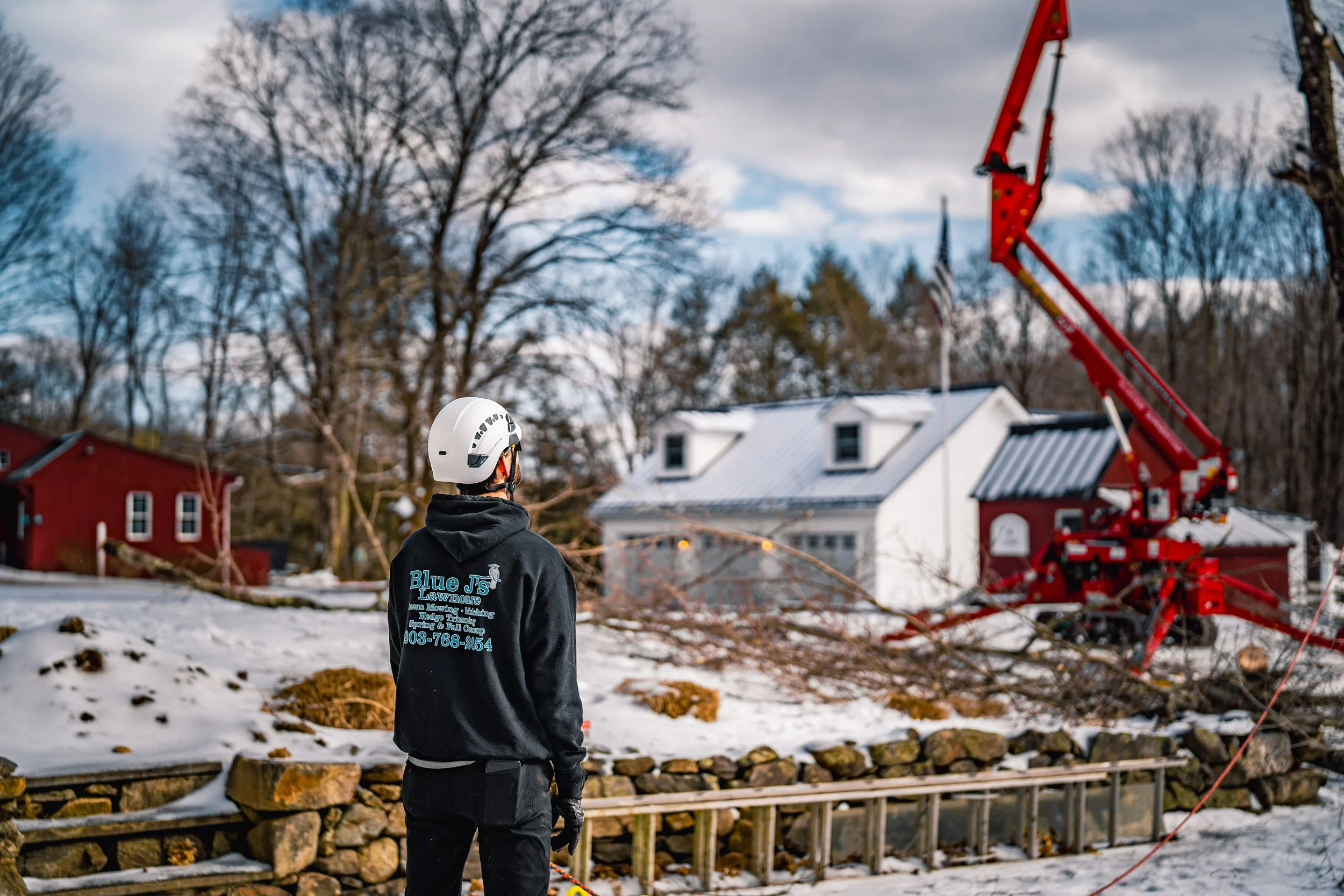
National tree care advice often overlooks regional realities.
Local professionals understand:
Connecticut storm patterns
Freeze depth and soil behavior
Common regional tree species and failure points
That local knowledge is critical when evaluating winter tree risks.
Frequently Asked Questions About Winter Tree Removal
-
Yes. Winter can be an excellent time for removing hazardous or damaged trees. Frozen ground and clear visibility often make removal safer and cleaner.
-
In many cases, yes. Frozen soil supports equipment better and helps reduce lawn and landscape damage.
-
Treat it as a potential hazard. Avoid the area and contact a professional for an inspection as soon as possible.
-
Insurance may cover emergency removal if a tree damages a structure. Preventive removal is usually not covered.
-
Contact Blue Js Lawncare Today for immediate emergency response
Response times depend on storm severity, but emergency tree removal services prioritize immediate safety hazards after major weather events.
-
Often, yes. Ice adds significant weight and rigidity, increasing the chance of sudden branch or tree failure.
